Quick Answer
- Property appreciation in Dubai now averages 4% to 10% across the city.
- Villas lead the market, with forecast growth near 17.7% in 2026.
- Off-plan projects can gain 25% to 40% by completion.
- Dubai charges zero capital gains tax on your profits.
- Adelaide grew 12.3% yearly, but taxes and yields differ.
Adelaide prices keep smashing records. Yet many local investors eye Dubai instead. The big question is simple. How strong is property appreciation in Dubai right now? The honest answer surprises most people.
This guide answers that question with hard data. Property appreciation in Dubai now runs 4% to 10% a year. That follows a red-hot 19.8% surge in 2025. The market is maturing, not stalling. Smart buyers still find strong growth zones.
Below, we map every growth number in detail. You will see appreciation by community and property type. We compare property appreciation in Dubai against Adelaide’s capital growth. We cover yields, taxes, and the main growth drivers. Five quick FAQs close out the guide.
How Much Does Dubai Appreciate?
Property appreciation in Dubai has entered a steadier phase. Growth is slower now, but far from flat.
| Property type | 2026 growth | Note |
| Citywide average | 4% to 10% | Down from 19.8% in 2025 |
| Villas | about 17.7% | Limited land, family demand |
| Apartments | 4% to 7% | Steadier, tenant-driven |
| Off-plan (to completion) | 25% to 40% | Emerging zones, top developers |
Property appreciation varies by asset type and location. Investors who align their strategy with these growth trends are better positioned to balance immediate income with long-term capital gains.
Citywide Rate
The whole-city rate now sits at 4% to 10%. That marks a sharp drop from 19.8% in 2025. ValuStrat forecasts around 10% citywide growth for 2026. Ready apartments see softer single-digit gains. Broader forecasts still range from 4% to 7% for 2026.
Prime homes grew 6% to 8% last year. Quality and location now matter more than ever. Property appreciation in Dubai now favours quality locations. So property appreciation in Dubai is moderating, not reversing. The headline rate simply reflects maturity. Location now decides your real return.
Villas Lead
Villas are strongly outperforming apartments right now. Forecasts put villa appreciation near 17.7% for 2026. Freehold villa values have risen 206% since the pandemic. Limited land and family demand drive this trend. Dubai Hills and Emirates Hills lead villa demand.
Buyers value space, privacy, and low density. Scarce plots keep pushing villa prices higher. This lifts overall property appreciation in Dubai. So villas anchor the strongest property appreciation in Dubai. Apartments still grow, just more slowly. Segment choice shapes your upside.
Off-Plan Spikes
Off-plan property offers the biggest growth potential. Top developers in emerging zones lead the way. Buying off-plan can gain 25% to 40% by completion. Dubai Creek Harbour is a prime example. Dubai South apartments gained 15% to 20% over 24 months.
Early-phase launches reward patient investors most. Completion then unlocks the built-in price uplift. Flexible payment plans also ease your entry. So off-plan can boost property appreciation in Dubai sharply. The reward comes with a construction timeline. Choose trusted developers only.
Together, these figures show healthy property appreciation in Dubai. Villas and off-plan lead the pack. Next, we map the fastest-growing areas.
Which Areas Grow Fastest?
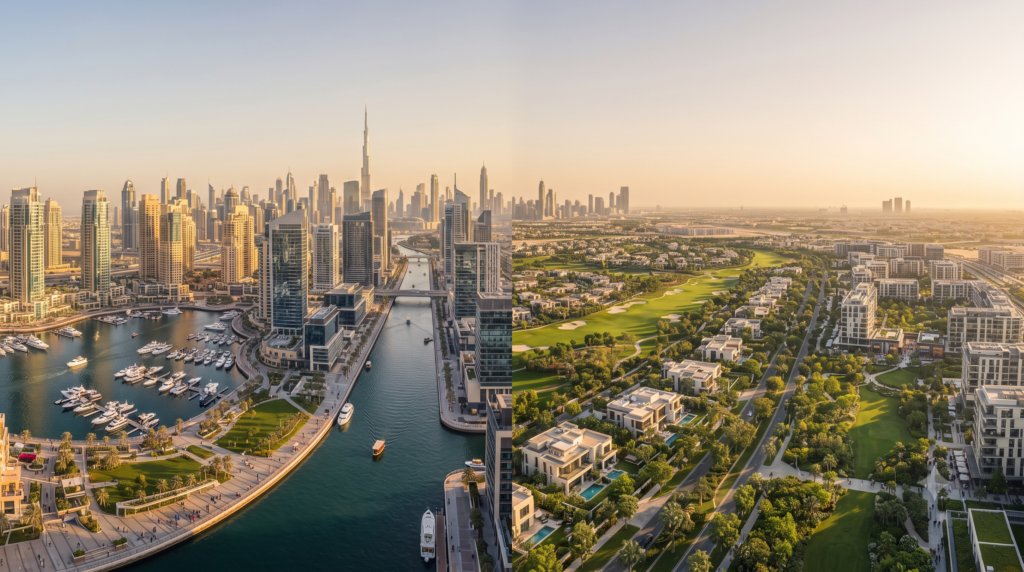
Property appreciation in Dubai concentrates in a few standout areas. Location decides your real growth.
| Community | Segment | YoY growth | Growth driver |
| Dubai South | Emerging corridor | +16% | Al Maktoum Airport |
| Dubai Creek Harbour | Premium waterfront | +15% | Off-plan, Creek Tower |
| Palm Jumeirah | Ultra-luxury beachfront | +14% | Safe-haven demand |
| Downtown Dubai | Premium city centre | +13% | Tourism, Burj Khalifa |
| Business Bay | Mid-to-high residential | +11% | Corporate tenants |
| JVC | Mid-market apartments | +10% | Volume, affordability |
The table highlights the communities leading Dubai’s growth cycle in 2026. Choosing areas with strong infrastructure, limited supply, and sustained demand can improve long-term capital appreciation.
Dubai South
Dubai South leads emerging-area growth right now. Prices there have climbed around 16% annually. The Al Maktoum Airport expansion drives demand. Analysts now call it a strategic corridor. This wider South Shift reflects city-level economic planning.
Better transport access keeps lifting local land values. The area now anchors long-term investor interest. Entry prices still remain relatively affordable. So Dubai South shows powerful property appreciation in Dubai. Infrastructure is repricing the whole area. Early buyers stand to benefit most.
Waterfront Zones
Premium waterfront areas keep posting strong gains. Dubai Creek Harbour has grown about 15% yearly. Palm Jumeirah adds around 14% on scarcity. Global buyers treat these as safe-haven assets. There is no more land left on the Palm.
That scarcity keeps prices firmly supported. Global capital treats these homes as stores of value. Limited supply protects long-term value. So waterfront zones deliver steady, reliable capital growth. Scarcity underpins their premium pricing. They suit long-term capital preservation.
Mid-Market Picks
Mid-market areas balance growth with affordability. JVC apartments have appreciated around 10% yearly. Business Bay adds about 11% on corporate demand. Downtown Dubai grows near 13% on tourism. JVC yields can reach 8% to 11% gross. High transaction volume keeps this area liquid. Affordable entry points attract steady tenant demand. These zones offer strong rental yields too.
So mid-market zones widen your growth and income options. They mix growth with cash flow. Entry costs stay reasonable.
Across these areas, property appreciation in Dubai varies widely. Emerging corridors lead on percentage growth. Next, we explain what fuels these gains
What Drives Dubai Growth?
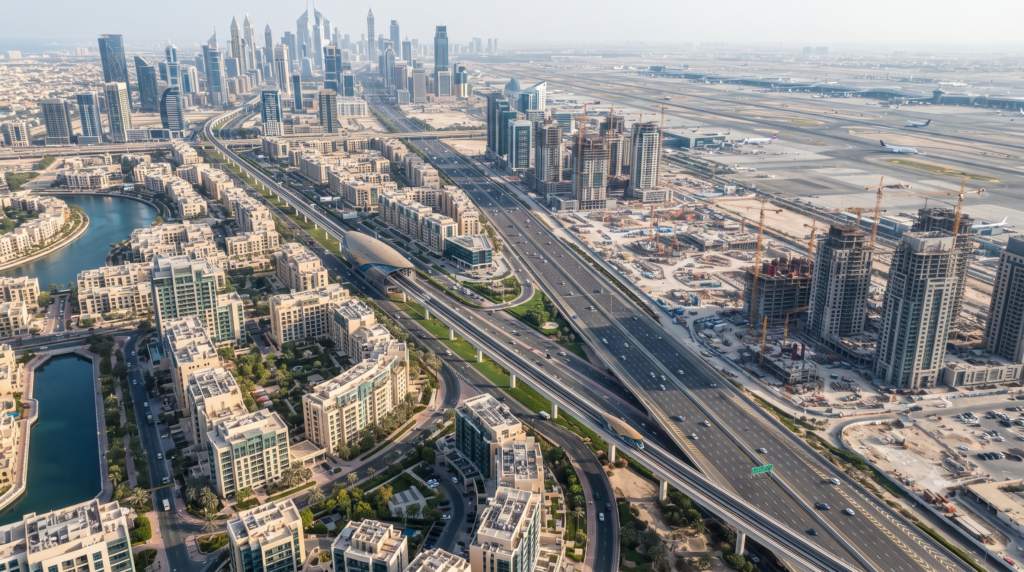
Several strong forces push property appreciation in Dubai upward. These drivers look durable for years ahead.
Population Surge
Dubai’s population surpassed 4 million in 2025. Another 175,000 to 225,000 residents may arrive in 2026. Most are skilled migrants and long-term residents. The IMF forecasts around 5% UAE growth for 2026. A strong economy keeps buyers confident.
Deep demand cushions the market against shocks. More people means deeper housing demand. That demand supports both prices and rents. So population growth underpins property appreciation in Dubai. End-users now lead the market. This makes demand far more stable.
Supply Pipeline
New supply shapes where prices rise or stall. Around 120,000 new units arrive in Dubai during 2026. That is more than triple 2025’s delivery. End-users now drive most purchases, not speculators. That shift adds real stability to prices.
Established communities absorb new supply best. Dubai recorded 79,281 home sales worth AED 221 billion in H1 2026. Supply-tight areas hold value best. So supply decides local property appreciation in Dubai. High-handover zones may cool briefly. Scarce areas keep on climbing.
Infrastructure Boost
Major infrastructure lifts nearby property values. The Blue Line Metro opens in 2029. It may boost values up to 25% near new stations. The Blue Line adds 14 new stations by 2029. Nearby communities should reprice as it nears.
Airport growth reshapes the whole southern corridor. The Al Maktoum Airport expansion reshapes demand too. These projects create long-term growth corridors. So infrastructure locks in future property appreciation in Dubai. Smart buyers track these projects early. Timing near completion pays off.
Together, these drivers sustain property appreciation in Dubai. Demand, supply, and infrastructure all align. Now compare this against Adelaide.
How Does Adelaide Compare?

Property appreciation in Dubai works very differently from Adelaide’s growth. Adelaide buyers can still buy property in Dubai from Australia easily.
| Metric | Figure |
| Median dwelling value | AUD 950,703 |
| Annual capital growth | 12.3% |
| 5-year growth | 79.1% |
| House CAGR (1 year) | 8.4% |
| Unit growth (1 year) | 11.3% |
| Gross rental yield | 3.3% to 3.4% |
These figures show why Adelaide has delivered strong capital growth in recent years, although rental yields remain relatively modest.
| Metric | Dubai | Adelaide |
| Annual appreciation | 4% to 10% | 12.3% |
| Gross rental yield | 6% to 9% | 3.3% to 3.4% |
| Capital gains tax | 0% | Up to 47% |
| Main driver | Foreign cash inflow | Domestic under-supply |
The comparison highlights the trade-off between the two markets. Adelaide has recently outperformed on growth, while Dubai offers higher rental income and greater tax efficiency.
Adelaide Growth
Adelaide has delivered exceptional recent growth. Its median dwelling value reached AUD 950,703. That reflects 79.1% growth over five years. Annual growth has run near 12.3%. Rental vacancy sits tight at 0.9% to 1.0%. Homes sell in just 26 days on average.
Owner-occupier demand keeps stock extremely scarce. Severe under-supply keeps pushing prices up. So Adelaide’s headline growth beats Dubai’s current rate. But yields and taxes tell another story. Both factors reshape net returns.
Yield Gap
Rental yields separate the two markets sharply. Adelaide houses yield just 3.3% to 3.4% gross. You can invest in property in Dubai for 6% to 9% yields. Some Dubai mid-market areas exceed 10%. Adelaide Hills suburbs grew up to 21.9% recently.
But their gross yields compress toward 2.5%. Fast price growth quietly erodes local returns. Higher yields boost your total return. So Dubai wins clearly on rental income. Adelaide’s fast growth compresses its yields. Cash flow favours Dubai strongly.
Tax Difference
Tax treatment creates the biggest gap of all. Australia taxes capital gains up to 47%. Dubai charges zero capital gains tax. It also charges no annual property tax. On a large gain, that tax gap is huge. Dubai lets your full profit compound. No inheritance tax applies in Dubai either. Your Dubai profit stays yours fully.
So property appreciation in Dubai keeps more profit. Australian gains face heavy tax. Dubai’s zero-tax edge compounds over time.
Overall, property appreciation in Dubai trades growth for yield and tax gains. Adelaide grows faster on paper. Dubai often wins on net returns.
Which Market Should You Pick?
The right market depends on your goal. Property appreciation in Dubai suits some strategies better.
Growth Strategy
Growth-focused investors chase capital appreciation. Off-plan Dubai projects fit this goal well. Emerging corridors offer 25% to 40% upside. A larger purchase can also unlock the Golden Visa. Longer holds smooth out market swings.
So growth hunters lean toward property appreciation in Dubai. Off-plan and emerging zones lead. Patience rewards this strategy.
Income Strategy
Income investors prioritise steady cash flow. Dubai yields of 6% to 9% suit them. JVC and Business Bay balance yield and growth. Strong Dubai investment properties deliver reliable rent. Zero income tax lifts net returns.
So income seekers still benefit from Dubai. High yields beat Adelaide comfortably. Tenant demand stays strong.
Balanced View
Many Adelaide buyers blend both markets. They hold local property for stability. They add Dubai for growth and yield. Compare top Dubai property projects before you commit. Always report worldwide income to the ATO.
So a blended plan can capture property appreciation in Dubai safely. Diversification lowers your overall risk. Seek advice on both sides.
Whatever your goal, property appreciation in Dubai deserves a close look. Growth, yield, and zero tax combine well. Below, we answer common questions.
Is Dubai Growth Worth It?
Property appreciation in Dubai remains strong and durable. Growth now runs 4% to 10% citywide. Villas and off-plan projects push far higher. Adelaide grows faster on paper today. Yet Dubai wins on yield and tax.
Zero capital gains tax makes property appreciation in Dubai hard to beat. Strong yields add to your total return. Emerging corridors offer the biggest upside. Always seek Australian tax advice first. With the right plan, Dubai rewards Adelaide investors.
Ready to explore Dubai’s high-growth property market? Register for the Dubai Property Expo Adelaide to meet trusted developers today.
What Do Adelaide Buyers Ask?
How much does property appreciate in Dubai each year?
Property appreciation in Dubai now averages 4% to 10% yearly. That is down from 19.8% in 2025. Villas and off-plan units often grow faster. Prime areas grew 6% to 8% annually last year. Emerging corridors lead the market.
Is Dubai property still a good investment in 2026?
Yes, for growth and income seekers alike. Property appreciation in Dubai pairs with 6% to 9% yields. Zero capital gains tax lifts net returns. The market now rewards careful location choices.
Which Dubai areas have the highest appreciation?
Dubai South leads at around 16% annual growth. Dubai Creek Harbour and Palm Jumeirah follow closely. Downtown and Business Bay also perform strongly. Dubai South gains flow largely from the new airport. Infrastructure drives most of these gains.
Does Dubai or Adelaide grow faster?
Adelaide grew 12.3% last year, ahead of Dubai’s current rate. But Dubai offers higher yields and zero tax. Property appreciation in Dubai often wins on net returns. Your goal decides the better market.
Do foreigners pay tax on Dubai property gains?
No, Dubai charges no capital gains tax on profits. This applies to residents and non-residents alike. Australians must still declare gains to the ATO. Dubai imposes no inheritance tax on property either. Your property appreciation in Dubai stays untaxed locally.