Quick Answer
-
The median property cost in Dubai is around AED 1.55 million as of 2026
-
Studios start from AED 450,000 and villas average AED 13.77 million
-
Buying costs add 7 to 10% on top of the purchase price
-
There is no property tax, no capital gains tax, and no tax on rental income
-
Adelaide investors can enter the market from as little as AED 450,000
A lot of Adelaide investors want to know the real cost of buying in Dubai before they commit to anything.
The purchase price is just the starting point. Once you add government fees, registration charges, and agent costs, the total picture looks different.
This guide breaks down every cost involved. Property cost by type, buying fees, ongoing ownership costs, and how the numbers compare to what Adelaide investors are used to at home.
What Are Dubai Property Costs in 2026
The first question most Adelaide buyers ask is how much properties actually cost. The answer depends on what type of property you are looking at and which part of the city you are buying in.
The median property cost per square foot in Dubai is AED 1,692 for residential properties combined, based on 192,808 transactions recorded from January 2025 onward. Apartments average AED 1,729 per square foot and villas AED 1,468 per square foot.
Here is a breakdown of what different budgets buy in 2026. Every figure in this table comes from Dubai Land Department transaction data.
|
Property Type |
Entry Price (AED) |
Entry Price (AUD approx) |
Average Transaction (AED) |
|
Studio apartment |
450,000 |
184,000 |
750,000 |
|
1 bedroom apartment |
750,000 |
306,000 |
1,200,000 |
|
2 bedroom apartment |
1,700,000 |
694,000 |
2,500,000 |
|
Townhouse |
2,000,000 |
816,000 |
3,650,000 |
|
Villa |
3,000,000 |
1,224,000 |
13,770,000 |
Based on Q2 2026 transaction data, townhouses sold for an average of approximately AED 3.65 million, while villas averaged around AED 13.77 million. These are citywide transaction averages rather than starting property cost.
The entry figures in that table tell a different story. Most Adelaide investors start with apartments or townhouses, not villas. And the entry price for a Dubai apartment sits well below the median house price in Adelaide today.
How Do Prices Vary by Location
Location shifts the price significantly. The same bedroom count can cost double depending on the suburb. Here is how the main areas compare for 2-bedroom apartments, based on 2026 DLD transaction data.
The table below gives Adelaide buyers a practical comparison across the most popular investment zones.
|
Area |
Average 2BR Price (AED) |
What It Offers |
|
Jumeirah Village Circle |
1,100,000 |
High rental demand, affordable entry |
|
Business Bay |
2,200,000 |
Central, strong short-term rental |
|
Dubai Marina |
2,800,000 |
Waterfront, premium rental yields |
|
Downtown Dubai |
3,500,000 |
Prestige location, luxury market |
|
Palm Jumeirah |
5,500,000 |
Ultra premium, global buyer base |
Prices in waterfront and central districts command a premium. However, areas with fewer than 500 annual transactions can be harder to exit. The most liquid communities such as JVC, Dubai South, DLRC, and Motor City offer the easiest resale path.
For Adelaide investors who are buying remotely and may want to sell in the future, liquidity matters just as much as the entry price. A cheaper apartment in a low-volume area can be harder to offload than a slightly pricier one in a high-demand zone.
You can explore the top Dubai property projects for Adelaide investors for a closer look at which developments attract the most buyer activity.
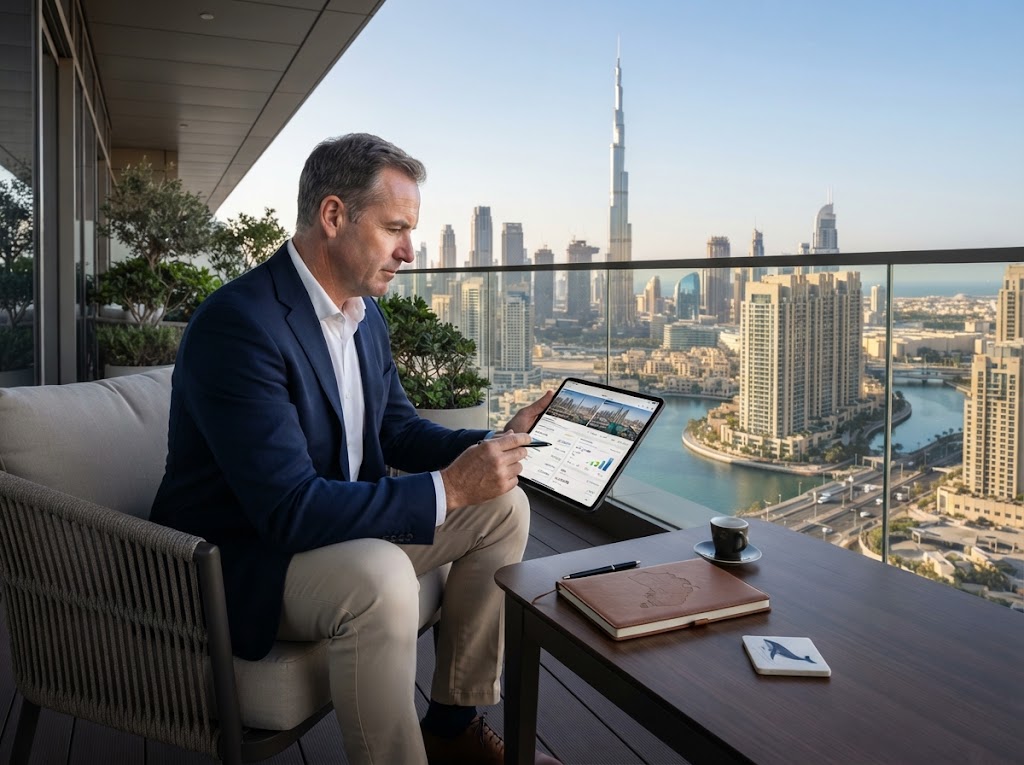
What Buying Costs Are Added on Top
The purchase price is not the final number. Every buyer pays additional costs on top. In 2026, total buying costs in Dubai are typically 7 to 8% of the property cost. These include the Dubai Land Department fee, registration fees, admin charges, and agent commission.
Here is the full breakdown of what Adelaide buyers need to budget beyond the sticker price.
The table below covers every cost category you will encounter, in the order they arise during a transaction.
|
Cost Item |
Amount |
Notes |
|
DLD transfer fee |
4% of purchase price |
Mandatory, paid to the government |
|
Title deed issuance |
AED 580 |
Fixed fee for ready properties |
|
Trustee office fee |
AED 4,200 |
Fixed admin charge |
|
Agent commission |
2% of purchase price |
Standard buyer agent rate |
|
Mortgage arrangement fee |
1% of loan amount |
Only if using a UAE bank loan |
|
Mortgage registration |
0.25% of loan amount |
DLD fee on financed purchases |
|
Property valuation |
AED 2,500 to AED 5,000 |
Required for mortgage buyers |
The highest upfront cost is the Dubai Land Department transfer fee, set at 4% of the property's purchase price. In most cases, buyers cover the full 4%, especially in a seller's market where demand is high and stock is low.
One exception worth knowing about. Off-plan purchases with Oqood registration charge a reduced 2% DLD fee in most cases, significantly lowering the upfront cost for buyers entering the market through new developments.
Here is what total acquisition costs look like in real numbers at different price points.
|
Property Price (AED) |
Buying Costs at 8% (AED) |
Total Cost (AED) |
Total Cost (AUD approx) |
|
800,000 |
64,000 |
864,000 |
352,000 |
|
1,500,000 |
120,000 |
1,620,000 |
661,000 |
|
2,500,000 |
200,000 |
2,700,000 |
1,101,000 |
|
5,000,000 |
400,000 |
5,400,000 |
2,203,000 |
Always budget for the full 8% rather than the minimum. Getting to settlement and running short on fees is a situation that catches some first-time foreign buyers off guard. If you want to understand the property transfer fee in detail, that page walks through the DLD fee structure specifically.
What Are the Ongoing Ownership Costs
Once you own the property, there are annual costs to factor into your investment return. Most Adelaide buyers focus on the purchase but overlook what comes after.
The good news first. Dubai has no annual property tax, no capital gains tax, and no tax on rental income. Most costs are paid upfront, making Dubai one of the most tax-efficient real estate markets globally.
The ongoing costs you do pay are:
-
Service charges. Paid annually to the developer or owners' association. Service charges range from AED 3 to AED 30 per square foot based on the location and purpose of the property. A 1,000 square foot apartment in a mid-tier community typically costs between AED 10,000 and AED 18,000 per year in service charges.
-
DEWA utility connection. Dubai Electricity and Water Authority charges apply when you connect utilities. The security deposit is AED 2,000 for apartments and AED 4,000 for villas, both refundable on exit.
-
Property management fee. If you are renting the property out from Adelaide and need someone local to manage it, most property management companies in Dubai charge 5 to 8% of annual rental income.
-
Home insurance. Optional but recommended for overseas owners. Costs vary by property value and coverage type.
-
Ejari registration. If you rent the property out, the tenancy must be registered through Ejari. The registration fee is AED 170 plus AED 40 for the typing centre.
These costs are manageable and predictable. For most Adelaide investors, the combination of no property tax and strong rental yields still produces a better net return than comparable assets back home. You can find more detail on how short term rental income works in Dubai for Adelaide owners who plan to let their property on platforms like Airbnb.
How Does Dubai Compare to Adelaide Property Costs
Adelaide investors are used to stamp duty, land tax, and ongoing council rates. Dubai works differently. Here is a direct comparison of what you pay in each market.
The table below covers the key cost differences between buying in Adelaide and buying in Dubai.
|
Cost Category |
Adelaide |
Dubai |
|
Government transfer fee |
Stamp duty, up to 5.5% |
4% DLD fee, fixed |
|
Annual property tax |
Council rates apply |
Zero |
|
Capital gains tax |
Applies on investment property |
Zero |
|
Tax on rental income |
Taxed as income |
Zero |
|
Agent commission |
2 to 2.5% |
2% |
|
Ongoing body corporate |
Applies to apartments |
Service charges apply |
The tax environment in Dubai is a genuine advantage for Australian investors. While there are no property taxes, buying a home in Dubai is not without cost. Government transfer fees, agency commissions, registration charges, and community service fees can all add up, especially at the top end of the market.
But on a like-for-like basis, the absence of capital gains tax and rental income tax means the net return from a Dubai property is structurally higher than a comparable Adelaide investment property, even before rental yields are compared. If you want to look at the benefits of buying property in Dubai versus staying in the Australian market, that page covers the investment case in more detail.
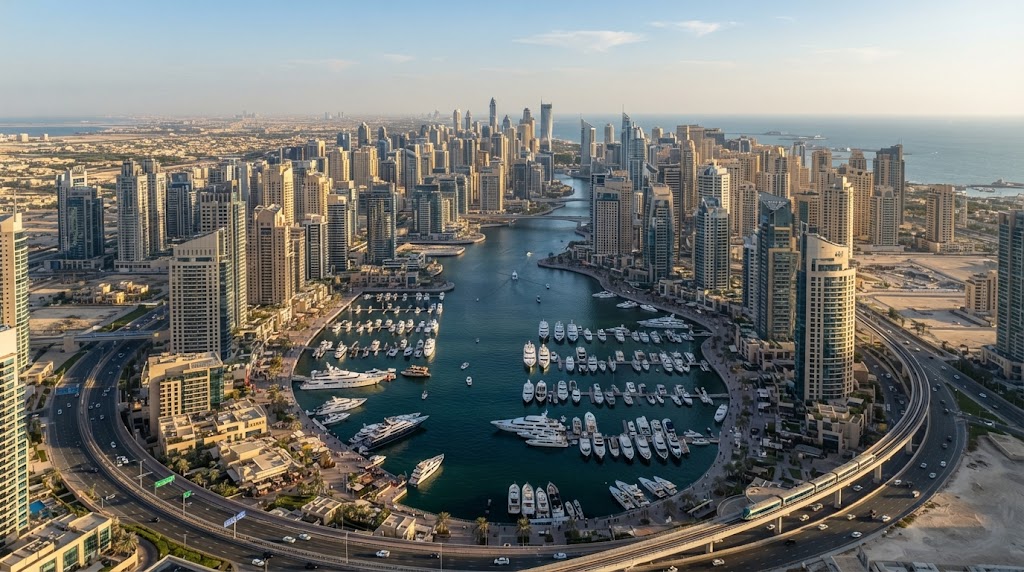
What Does the Market Look Like Right Now
Dubai recorded over 197,000 property transactions worth AED 624 billion between January and November 2025, already surpassing previous full-year records before December even began.
Prices have risen 94% since 2020, but growth is decelerating. Growth was 8.8% in 2025 versus 26.9% in 2022. That deceleration is actually a healthier signal for new buyers. The explosive growth phase has passed, and the market is settling into a more measured pace that rewards well-selected assets rather than speculative buying.
Key market indicators Adelaide investors should know:
-
Apartment price growth in Q1 2025 was 15.60% year on year. Villa price growth in the same period was 17.81% year on year.
-
Villas in Dubai have outperformed apartments by roughly 2 percentage points annually since 2023, yet apartments still account for about 74% of all residential transactions.
-
Off-plan purchases continue to attract strong buyer interest because of staged payment plans and the reduced 2% DLD fee on registration.
For Adelaide investors thinking about timing, the current phase rewards buyers who focus on location quality, developer track record, and long-term rental demand rather than chasing the sharpest price growth.
How to Start Your Dubai Property Search from Adelaide
Most Adelaide investors do not know where to begin. The good news is that the entire buying process can be completed remotely. You do not need to fly to Dubai to research, select, or even complete a purchase.
The practical steps are:
-
Set a realistic budget that includes the 7 to 10% in buying costs on top of the purchase price
-
Decide whether you are buying ready or off-plan, since both carry different cost structures
-
Get finance pre-approved if you plan to use a UAE bank loan, so you know your exact borrowing limit
-
Select a community based on rental demand and liquidity, not just price
-
Work with a licensed Dubai agent and a local property manager from day one
If you are weighing up whether to invest in Dubai property as your next move, understanding the full cost picture is the right starting point.
Ready to See the Numbers for Your Budget
The Dubai Property Expo Adelaide brings licensed developers and investment specialists to Adelaide so you can ask these questions face to face.
You can compare real projects, see actual payment plans, and get finance guidance specific to your situation.
Register your place at the Dubai Property Expo Adelaide before spots fill. Consultation sessions are limited and run on a first-come basis.
Frequently Asked Questions
How much does it cost to buy property in Dubai in 2026?
The median property cost in Dubai sits at around AED 1.55 million in 2026, based on Dubai Land Department transaction data. Studios start from AED 450,000 and villas average AED 13.77 million in the Q2 2026 data. On top of the purchase property cost, buyers should budget 7 to 10% in additional costs covering the DLD fee, agent commission, and registration charges.
What is the DLD fee and how much is it?
The Dubai Land Department transfer fee is 4% of the property cost and is mandatory for all property transactions in Dubai. It is the single largest upfront cost beyond the purchase price itself. For off-plan purchases registered through Oqood, the DLD fee is reduced to 2% in most cases, which makes new developments cheaper to enter than secondary market properties.
Are there annual property taxes in Dubai?
No. Dubai has no annual property tax, no capital gains tax, and no tax on rental income. The main recurring costs for owners are service charges, which range from AED 3 to AED 30 per square foot annually depending on the community, plus DEWA utility charges and property management fees if the property is being rented out remotely.
Can Adelaide investors buy property in Dubai without visiting?
Yes. The entire purchase process can be completed remotely. Document submission, mortgage applications, and even the DLD transfer can be handled through a power of attorney. Many Adelaide investors complete their Dubai purchase without making a single trip, using licensed agents and local property managers to handle everything on the ground.
What is the cheapest way to enter the Dubai property market?
Studios and one-bedroom apartments in communities like Jumeirah Village Circle offer the lowest entry points, starting from around AED 450,000 to AED 750,000. Choosing an off-plan property also reduces the DLD fee from 4% to 2% and allows buyers to spread payments over a developer payment plan rather than paying the full amount upfront.
How do Dubai property costs compare to Adelaide?
Dubai median prices sit at around AED 1.55 million, which converts to roughly AUD 632,000 at current exchange rates. Comparable properties in inner Adelaide suburbs are priced similarly or higher, but Dubai offers no capital gains tax, no rental income tax, and gross rental yields that typically run between 6% and 9%, well above what Adelaide investment properties produce after tax.