Quick Answer
-
Yes, UAE banks do lend to non-residents, including Australians based in Adelaide
-
You need a minimum deposit of 40% as a non-resident buyer
-
Interest rates for non-residents start from around 4.49% per annum
-
Banks that lend to non-residents include Emirates NBD, HSBC Middle East, Mashreq Bank, Standard Chartered UAE and ADIB
-
The approval process takes 3 to 6 weeks from application to offer letter
Most Adelaide investors assume they need to pay full cash to buy in Dubai. That is not true.
UAE banks have been lending to non-residents for over two decades. Since a change in local law in 2002, foreign buyers have been able to purchase property in Dubai and apply for a mortgage through selected UAE banks. Today, in 2026, that market is more structured and accessible than ever.
The rules are stricter than what residents face. The deposit is higher, the loan-to-value ratio is lower, and fewer banks participate. But the option exists, and for Adelaide investors who want to preserve capital and use leverage, it is worth understanding properly.
This guide covers everything you need to know. Which banks lend to non-residents, what deposit you need, what rates to expect, what documents you need to prepare from Australia, and how the step-by-step process works without you ever needing to set foot in a bank branch.
Can Non-Residents Get a UAE Bank Loan
The short answer is yes. Non-residents can get a mortgage in Dubai through selected UAE banks and financial institutions. Approval depends on factors such as income, employment status, credit history, nationality, property type, and the ability to meet the required down payment.
The keyword there is selected. Not every UAE bank offers non-resident products. The ones that do have specific criteria, and your eligibility depends on meeting all of them, not just most.
While residents can borrow up to 75 to 80% of a property's value, non-residents are usually limited to 50 to 60% loan-to-value. That means you bring more to the table upfront, but you can still finance a meaningful portion of the purchase through the bank.
For an Adelaide investor, this changes the maths considerably. Instead of tying up AUD 500,000 in a single purchase, you might put in AUD 250,000 as a deposit and borrow the rest. That frees capital for other Dubai investment properties while the Dubai asset generates rental income.
Which UAE Banks Lend to Non-Residents
The banks most active in the non-resident mortgage space include Emirates NBD, which offers up to 60% financing for non-residents with competitive rates and fast approvals. Mashreq Bank is known for flexible terms and attractive fixed rate options.
ADIB, the Abu Dhabi Islamic Bank, provides Sharia-compliant home finance for non-residents. HSBC Middle East caters to international clients with simpler documentation requirements. Standard Chartered UAE offers hybrid mortgage products with global customer support.
Each bank has its own criteria for which nationalities it accepts. Australians are generally well regarded because Australia is considered a stable economy with strong bilateral ties to the UAE. That said, you need to confirm eligibility with each bank directly, as the approved country lists do get updated.
One important point for Adelaide buyers. Some banks maintain a list of approved property developers. If you are buying off plan in Dubai, check that your chosen developer is on that bank's approved list before you sign anything with the developer.
What Deposit Do You Need
This is where the biggest difference sits between resident and non-resident borrowing.
Foreign buyers typically need a minimum down payment of 25% for a first property under AED 5 million, though non-residents are often required to put down 35% to 40% because banks offer them lower loan-to-value ratios.
Here is what that looks like in real numbers:
|
Property Price (AED) |
Property Price (AUD approx) |
Deposit at 40% (AED) |
Deposit at 40% (AUD approx) |
|
1,000,000 |
408,000 |
400,000 |
163,000 |
|
1,500,000 |
612,000 |
600,000 |
245,000 |
|
2,000,000 |
816,000 |
800,000 |
326,000 |
|
3,000,000 |
1,224,000 |
1,200,000 |
490,000 |
In practice, most Adelaide buyers should plan for 40%. That is the figure most commonly required by UAE banks for non-resident applicants in 2026, and budgeting below that risks your application being declined at the assessment stage.
What Interest Rates Can You Expect
UAE mortgage rates are tied to EIBOR, the Emirates Interbank Offered Rate. This is the benchmark rate UAE banks use, similar to how Australian home loans track the RBA cash rate.
The interest rate is linked to EIBOR. Some banks offer fixed plus variable structures, where the first few years are fixed, followed by variable rates. This gives both stability and long-term flexibility.
As of July 2026, non-resident buyers can expect rates starting from 4.49% per annum. Variable rates are structured as 3-month EIBOR plus a margin starting from 0.70%.
To put that in context, the stronger your financial profile, the more room you have to negotiate. A large deposit, clean credit history, and stable income from Australia all work in your favour when the bank is assessing your rate.
Here is a rate comparison across buyer types in 2026:
|
Buyer Type |
Typical Rate Range |
LTV Available |
|
UAE National |
3.75% to 4.50% |
Up to 85% |
|
UAE Resident Expat |
3.99% to 5.00% |
Up to 80% |
|
Non-Resident (Foreign Buyer) |
4.49% to 6.50% |
50% to 60% |
|
Non-resident (High Profile) |
4.49% to 5.50% |
Up to 60% |
Non-residents should typically expect mortgage interest rates in Dubai around 5 to 6.5%. Under some conditions, including good income, a large down payment, and strong credit, rates can be lower.

Income Requirements for Adelaide Applicants
The minimum income for a UAE home loan for non-residents is typically USD 3,000 to 5,000 per month, or the equivalent in another currency. For Adelaide buyers, that converts to roughly AUD 4,500 to 7,500 per month in gross income.
Two hard limits shape every mortgage for non-residents in Dubai. A 50% Debt Burden Ratio cap and a seven times annual income financing ceiling. Both apply simultaneously, and the lower of the two determines your actual maximum loan amount.
What this means in practice. If you earn AUD 10,000 per month gross, your total monthly debt repayments across all loans, including any Australian mortgage, cannot exceed AUD 5,000. The bank looks at your global debt picture, not just what you owe in Dubai.
This catches some Adelaide investors off guard. If you already carry a large Australian mortgage, your borrowing capacity in Dubai shrinks accordingly. Run the numbers with a mortgage broker before you start the application process. It also helps to understand the full cost of buying property in Dubai before you commit to a purchase price.
Age is also a factor. A 50-year-old non-resident expecting a 25-year mortgage will receive only 15 years because UAE banks cap the loan term at age 65. This significantly increases monthly payments and should be factored into your affordability calculation.
What Documents You Need From Australia
Required documents for non-resident mortgage applications include a valid passport, 6 months of bank statements, a salary certificate or payslip from your employer, and a credit report from your home country.
For self-employed Adelaide business owners, the requirements are heavier. You will need financial statements, tax returns, and proof of business ownership on top of the standard set.
Here is the full document list to prepare before you apply:
|
Document |
Notes |
|
Valid passport |
Must have at least 6 months' validity |
|
6 months of bank statements |
All accounts, showing income and outgoings |
|
Salary certificate or payslips |
Last 3 to 6 months |
|
Credit report |
From Equifax or Experian Australia |
|
Proof of address |
Utility bill or council rates notice |
|
Tax returns |
Last 2 years if self-employed |
|
Business financials |
If self-employed, profit and loss statements |
|
Signed purchase agreement |
Once you have selected a property |
Get certified translations for any document that is not in English or Arabic. Australian documents in English are generally accepted as is, but confirm with the specific bank first.
The Step-by-Step Application Process
The typical timeline from application to approval is 3 to 6 weeks. Here is how the process works for an Adelaide buyer:
Step 1. Get pre-approved before you start looking. Submit your income, nationality, and financial profile to the bank or a UAE mortgage broker. Pre-approval tells you exactly how much you can borrow. It also strengthens your position when negotiating with developers.
Step 2. Select your property. Once pre-approved, find a property in a designated freehold zone. Dubai Marina, Downtown Dubai, Business Bay, Palm Jumeirah, and Dubai Creek Harbour are all freehold areas where non-residents can buy and where banks will lend.
Step 3. Sign the MOU. Once you agree on price with the seller or developer, you sign a Memorandum of Understanding. At this point you typically pay a 10% deposit to hold the property.
Step 4. Bank valuation. The bank orders an independent property valuation. This costs AED 2,500 to 3,500 and is paid by you as the buyer.
Step 5. Final approval and offer letter. The bank reviews the valuation, finalises loan terms, and issues a formal offer letter. Review every number carefully before signing.
Step 6. DLD registration and transfer. You sign the mortgage agreement and register it with the Dubai Land Department. The DLD mortgage registration fee is 0.25% of the loan amount.
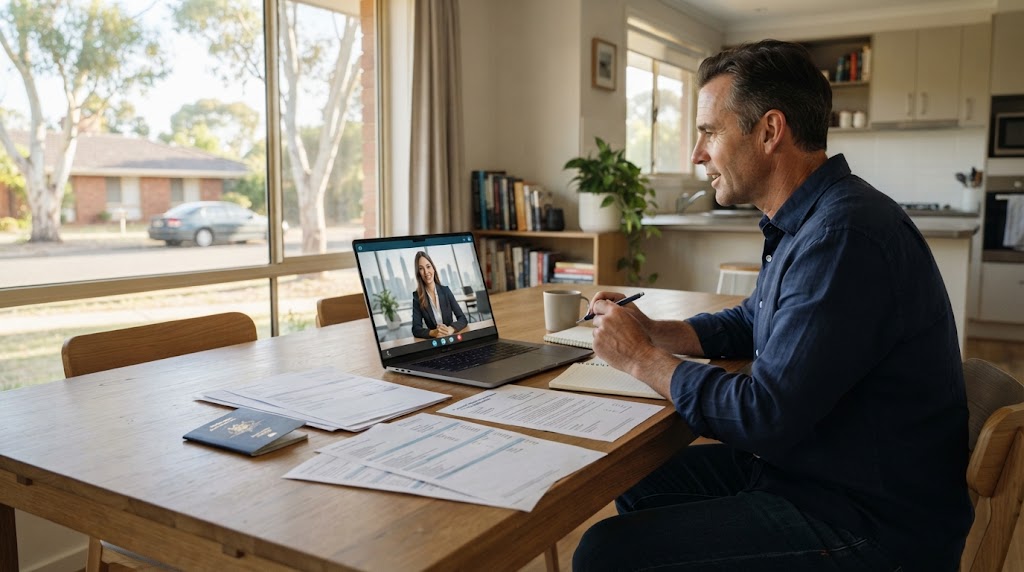
The entire process can be completed from Adelaide. The bank application, document submission, and even the DLD registration can be handled remotely, which is something many Adelaide investors already manage when they buy Dubai property remotely through a power of attorney if needed.
Additional Costs to Budget For
The deposit is not the only upfront cost. Budget 1 to 1.5% of the loan amount for mortgage arrangement fees alone. On top of that, you have DLD transfer fees and the bank valuation cost.
Here is a full cost breakdown for a non-resident buyer:
|
Cost |
Amount |
|
Deposit |
40% of property price |
|
DLD transfer fee |
4% of property price |
|
DLD mortgage registration |
0.25% of loan amount |
|
Bank arrangement fee |
1% to 1.5% of loan amount |
|
Property valuation |
AED 2,500 to AED 3,500 |
|
Agent commission (if applicable) |
2% of property price |
For a property priced at AED 1,500,000 with a 60% loan of AED 900,000, total upfront costs including deposit, DLD fees and mortgage costs would sit at approximately AED 660,000 to AED 700,000. Always get a full cost breakdown from your mortgage broker or agent before committing.
Should You Borrow in Dubai or Use Australian Equity
This is the question many Adelaide investors face. Two options are available to you.
Option 1. Get a UAE bank loan. You borrow in AED, repay in AED, and the rent you collect covers the repayments. Clean and simple. The currency risk is low because Dubai rentals are priced in AED.
Option 2. Refinance your Australian home. If you have equity in your Adelaide property, some Australian lenders allow you to release equity and use the funds to buy property in Dubai from Australia outright. You borrow in AUD, which removes currency conversion risk on the repayments.
Each option has trade-offs. The UAE bank loan keeps your Australian mortgage separate and ring-fences the Dubai investment. The Australian equity release is simpler from a banking perspective but adds risk to your family home.
Talk to both a UAE mortgage broker and your Australian mortgage adviser before deciding. The right answer depends on your overall asset position, income stability, and how the numbers stack up in each currency.
Ready to Explore Your Finance Options
Understanding finance is the first step. Taking action is the next one.
The Dubai Property Expo Adelaide brings licensed developers, investment advisers, and property finance specialists to Adelaide in one place. You can ask these questions face to face, compare projects that qualify for non-resident lending, and walk away with real numbers for your situation.
Register your spot at Dubai Property Expo Adelaide before places fill. Private consultation sessions are limited and run on a first-come basis.
Frequently Asked Questions
Can I get a UAE bank loan as an Australian citizen living in Adelaide?
Yes. Australian citizens are generally accepted by UAE banks that offer non-resident mortgage products. You need to meet the income, credit, and deposit requirements like any other non-resident applicant. Confirm with each bank that Australia is on their approved country list.
What is the minimum deposit for a non-resident buying in Dubai?
Non-residents are often required to put down 35% to 40% because banks offer them lower loan-to-value ratios. Budget for 40% to be safe when planning your purchase.
How long does UAE mortgage approval take for non-residents?
The typical timeline from application to approval is 3 to 6 weeks. Having all your documents ready before you apply cuts this down significantly.
Do I need to be in Dubai to apply for a UAE bank loan?
No. The entire process can be handled remotely. Document submission happens online or via courier. If you cannot travel for the DLD registration, a local power of attorney holder can complete the transfer on your behalf.
What happens if the AUD drops against the AED during my loan term?
Your loan repayments are in AED. If the AUD weakens, your repayments cost more in Australian dollar terms. This is the currency risk of borrowing in UAE dirhams. Many investors offset this by paying repayments directly from rental income collected in AED rather than converting money from Australia each month.
Can I use my SMSF to take out a UAE bank loan?
This is a complex area, and the rules differ between Australian superannuation law and UAE banking requirements. SMSF borrowing in Australia is already restricted, and UAE banks do not typically lend to foreign trusts or super funds directly. Get specialist SMSF advice before assuming this is possible.
Which property types are eligible for non-resident UAE bank loans?
The property must be located in a freehold zone where foreigners are allowed to own property. If the property is in a non-freehold area, UAE banks generally do not offer mortgages to non-residents.
What is EIBOR and how does it affect my repayments?
EIBOR stands for Emirates Interbank Offered Rate. It is the interest rate charged by banks in the UAE for interbank transactions. Variable rate mortgages are priced as EIBOR plus the bank's margin. If EIBOR rises, your repayments go up. If it falls, they go down. Fixed rate products protect you from this movement for the fixed period, typically 1 to 5 years.